Sensitive skin takes a beating out here. It gets more sun, more friction and more grime, plus almost nothing that keeps it calm at home.
Most of the fix comes down to what you leave out of your kit. The best soap for backpacking and hiking with sensitive skin skips fragrance and harsh sulfates, keeps the ingredient list short and needs as little water as you can get away with. We'll walk through the ingredients worth dropping, how each soap format treats reactive skin and a Leave No Trace routine that's easy on you and in the backcountry.
TL;DR Quick Answers
Best Soap for Backpacking and Hiking
The best soap for backpacking and hiking is fragrance-free, SLS-free and alcohol-free, with a short ingredient list and as little need for water as possible. For hands, a rinse-free soap is the gentlest pick. It lifts grime off dry skin and leaves no greywater behind.
For hands. Rinse-free soap. Rub it on dry hands until it clumps, brush it away, and skip the cold-water soak.
For body and dishes. A few drops of diluted, fragrance-free castile, liquid or powdered soap.
Skip. Added fragrance, peppermint and tea tree oils, SLS and isothiazolinone preservatives.
Where to wash. At least 200 feet from lakes and streams, even with biodegradable soap.
Backup only. Hand sanitizer, which struggles with dirty hands and norovirus.
Before you go. Patch test every product at home for a few days.
Top Takeaways
Know the irritants. Fragrance, essential oils, SLS and certain preservatives cause the most trouble in camp soaps.
Read the label. "Unscented" and "fragrance-free" aren't interchangeable, so look for fragrance-free.
Wash less in cold water. Fewer wet-and-dry cycles means less damage to your skin barrier.
Go rinse-free for hands. It's the gentlest option for hands and leaves no greywater.
Keep your distance. Wash at least 200 feet from lakes and streams, even with biodegradable soap.
Treat sanitizer as a backup. It doesn't replace soap on the trail.
Patch test at home. Try every product before the trip, not during it.
Why the Trail Is Rough on Sensitive Skin
At home, your skin gets warm water, a soft towel and moisturizer within arm's reach. Out here, it gets layers. Dried sweat leaves salt behind. Sunscreen and bug spray build a film over it, wind and UV dry everything out, and pack straps rub the same spots for hours.
Then you wash. Most backpackers scrub in cold water several times a day and let the wind handle the drying. Each wet-and-dry cycle pulls a little more oil out of your skin barrier, and a strong or scented soap speeds that up. Redness, itching and split fingertips usually show up next.
Common Irritants Hiding in Camp Soaps
Added fragrance. One of the most common triggers of skin reactions, and you'll find it in scented camp washes and "fresh" wipes.
Peppermint, tea tree and eucalyptus oils. Natural doesn't mean gentle. These popular castile and camp soap scents can sting and dry reactive skin.
Sodium lauryl sulfate (SLS). A strong detergent that strips natural oils, common in budget washes and some concentrates.
Cocamidopropyl betaine. A foaming agent some people react to. Look for it in body washes and some biodegradable washes.
Methylisothiazolinone. A preservative with a reputation for contact reactions that turns up in liquid washes and wet wipes.
The American Academy of Dermatology keeps its advice simple: pick a gentle, fragrance-free cleanser and use only as much as you need. Watch the label, though. "Unscented" and "fragrance-free" mean different things, and unscented products can still carry odor-masking chemicals that irritate dry skin. Look for both words.
What to Look For in the Best Soap for Backpacking and Hiking
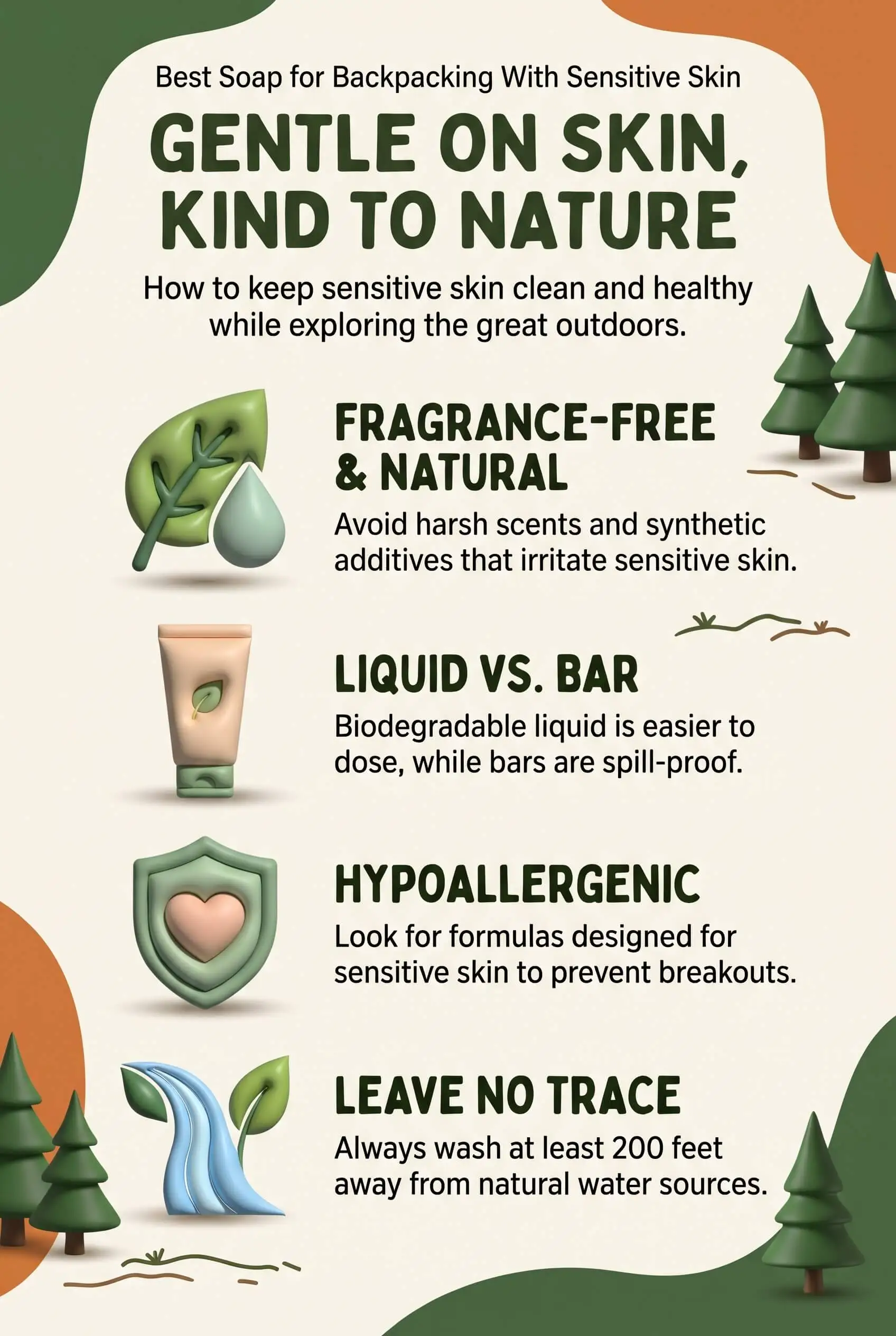
Fragrance-free. Unscented isn't enough. You want no added fragrance and no essential oils.
Gentle cleansers. Skip SLS and the other harsh sulfates that strip oil.
Short ingredient list. Every ingredient you cut is one less thing your skin can react to.
Alcohol-free. Stressed skin doesn't need anything to dry it out further.
Leak-proof and light. Let a soap bottle leak into your food bag once and you'll never trust it again.
Low or no water. Fewer cold-water washes means fewer wet-and-dry cycles.
Leave No Trace friendly. The less greywater a soap creates, the easier it is to wash responsibly.
Trail tip. Test any new soap at home first. Use it on your hands and inner forearm for a few days before you leave. A reaction on your couch is annoying. Twenty miles from the trailhead, it can end the trip.
Backpacking Soap Formats Compared for Sensitive Skin
Liquid castile. A good fit if it's unscented and well diluted. It packs light but can leak.
Concentrated camp wash. Hit or miss, so check the label for SLS and fragrance. A tiny bottle lasts a long time.
Powdered soap. A good fit when it's SLS-free, and it can't leak.
Soap sheets. A fair fit, since many are scented. They weigh almost nothing, need only a little water and clump if they get damp.
Bar soap. A good fit in unscented, simple formulas. You'll need a case, and the bars dry slowly.
Biodegradable wipes. Mixed results, because many contain fragrance and preservatives. They need no water, but every used wipe gets packed out.
Rinse-free hand soap. A strong fit, since it skips wet-and-dry cycling entirely. It needs no water, won't leak and leaves no greywater.
Every format above that uses water also needs you at least 200 feet from lakes and streams when you wash.
Unscented castile is where a lot of gear reviewers land. Plenty of those same reviewers call concentrated castile too strong for very sensitive skin, so if it's your pick, dilute it generously.
Why Rinse-Free Soap Is the Gentlest Choice for Backcountry Hands
Your hands take the worst of it. You clean them before every meal, after every cathole trip and every time stove fuel ends up on your fingers. That's where going rinse-free pays off most. If your skin reacts to nearly everything and you're after the best soap for backpacking and hiking, consider an all natural non toxic hand soap that works without water. Start with your hands — and start without water.
NOWATA goes on dry hands. Rub in a dime-sized drop until it clumps, then brush the clumps away, and the grime leaves with them. It pulls germs off your skin instead of killing them, so you skip the rinse and the cold-water soak, and your knuckles don't spend the afternoon drying in the wind.
The formula is alcohol-free and plant-based, built on tapioca starch and a coconut-derived cleanser. That's a short list next to most camp washes. One heads-up for sensitive skin: it contains ethyl macadamiate, so patch test first if macadamia nuts give you trouble.
How to Use Soap Without Breaking Leave No Trace
The Leave No Trace principles put soap in the waste category, and they have good reason to. "Biodegradable" doesn't mean "use it anywhere." Even biodegradable soap changes water quality in lakes and streams, which is why it needs soil, distance and a light hand to break down.
Step-by-Step: Washing Up at Camp
Carry your water at least 200 feet from lakes and streams before you wash.
Use a few drops of soap. Concentrates stretch further than you'd expect.
Wash with a pot, a bandana or a small cloth, and keep the soap out of the water source itself.
Strain food scraps out of your dishwater and pack them out.
Scatter the greywater widely, well away from camp.
Clean your hands with a rinse-free soap so they create no greywater at all.
A Sensitive-Skin Hygiene Routine for Multi-Day Trips
Before the trip. Patch test every product you plan to pack, and decant liquids into leak-proof bottles.
On the trail. Clean your hands before you eat and after every bathroom stop. Those two moments matter most.
At camp. Sponge-bathe your feet, underarms, groin and neck with a damp cloth and a drop of gentle soap. Wipe off sunscreen and repellent before you crawl into your bag.
Overnight. Rub a fragrance-free balm into your hands and hot spots. Then store your soap with your food in the bear bag or canister, because even unscented soap can draw wildlife.
Is Hand Sanitizer Enough on the Trail?
Sanitizer earns a spot in your hip-belt pocket, but only as a backup. The CDC says soap and water beat sanitizer against norovirus, the bug behind many trail stomach outbreaks. Sanitizer also struggles on visibly dirty or greasy hands, which describes most hands after a day of camping, and its alcohol dries out skin that's already raw. Carry a small bottle for emergencies and lean on the best waterless hand soap or a rinse-free cleanser for everything else.
When Trail Irritation Needs a Doctor
Some dryness and redness after a long trip is normal. Blistering, a spreading rash, swelling, or cracks that bleed, ooze or look infected are a different story.
If you spot those signs, stop using the product and see a doctor or dermatologist once you're off the trail. Toughing out a reaction for another 50 miles won't make it heal faster.
"The pattern I see most is hikers blaming the trail for what's really their soap. Someone with reactive skin trades their fragrance-free routine at home for a peppermint camp wash, then scrubs in snowmelt four or five times a day. By day three, their knuckles are split. The fix is boring, and it works. Test your soap at home before you go, and cut hand washes down to before meals and after the bathroom. Use a rinse-free cleaner for those so you're not soaking and air-drying your hands in cold water, then moisturize at night with something fragrance-free. Clean hands and calm skin can go together. You just need the right formula and fewer wash cycles."
7 Essential Resources
Leave No Trace Center for Outdoor Ethics: Principle 3, Dispose of Waste Properly. Where the 200-foot rule and dishwater straining come from, and why even biodegradable soap affects water.
U.S. National Park Service: Leave No Trace Seven Principles. The park service's rundown of all seven principles, including washing and camp distances from water.
CDC: Hand Sanitizer Guidelines and Recommendations. When sanitizer falls short, from norovirus to dirty hands after camping.
American Academy of Dermatology: Dermatologists' Top Tips for Relieving Dry Skin. Fragrance-free products, gentle cleansing and why "unscented" can still irritate.
The Trek: How to Wash Your Hands on a Backpacking Trip. Practical handwashing advice from a thru-hiking publication, including how to store soap around wildlife.
ConsumerLab: What to Look For When Picking a Soap or Body Wash. Ingredient-level tips on the fragrances, surfactants and preservatives that commonly irritate skin.
Treeline Review: Best Biodegradable Soap for Camping. A field-tested comparison of camp soaps, with notes on SLS content and sensitive skin.
3 Statistics
Handwashing education cuts diarrheal illness by 23 to 40% and respiratory illness by 16 to 21% in community settings, according to the CDC's Handwashing Facts. On a crowded trail where everyone shares the same water sources, clean hands count for even more.
About 31.6 million people in the U.S., roughly 10% of the population, have some form of eczema, according to the National Eczema Association. That's a lot of hikers who need a gentler soap.
About 4.5% of the general population in Europe showed fragrance contact allergy when researchers patch tested them with several fragrance markers between 2008 and 2011, according to a peer-reviewed review on fragrance contact allergy. For a lot of people, fragrance-free is the whole difference between a good trip and a miserable one.
Good hygiene matters on the trail. CDC data shows that handwashing education reduces diarrheal illness by 23–40% and respiratory illness by 16–21%. With roughly 31.6 million Americans affected by eczema and 4.5% of Europeans showing fragrance contact allergies in the cited research, choosing a gentle, fragrance-free soap is especially important. Whether you're washing up after outdoor activities or handling pest control around your campsite, keeping your hands clean without irritating sensitive skin should be a priority.
Final Thoughts and Opinion
Here's our take. Most "best camp soap" lists assume your skin can handle anything. If yours can't, drop the scent and the harsh sulfates, then cut cold-water hand soaks down to what hygiene actually requires.
That's why we'd stop hunting for one perfect bottle. The best soap for backpacking and hiking with sensitive skin works as a small kit — a rinse-free cleanser for your hands, a few drops of diluted fragrance-free soap for camp washes and a fragrance-free balm for night. Each piece does less work, so your skin spends less time recovering.
Dial in the kit at home before you go. Patch test, pack light and follow Leave No Trace, and your skin can come home in better shape than your boots.
Frequently Asked Questions
Q: What is the best soap for backpacking with sensitive skin?
A: For most sensitive skin, a fragrance-free, SLS-free soap with a short ingredient list works best. A rinse-free soap is the gentlest pick for hands because it skips repeated cold-water washing and wind-drying. For body and dishes, use a few drops of a diluted, fragrance-free liquid or powdered soap at least 200 feet from water.
Q: Is castile soap good for sensitive skin?
A: Sometimes. Unscented castile soap treats plenty of people well, but concentrated castile can feel harsh on very sensitive skin. Dilute it well, use only a few drops and skip the peppermint, tea tree and eucalyptus versions. If your skin still reacts, try a rinse-free or fragrance-free alternative.
Q: Can I use biodegradable soap in a lake or stream?
A: No. Leave No Trace guidance says to carry water at least 200 feet from lakes and streams before you wash. Biodegradable soap still affects water quality and needs soil to break down. Wash with a pot or cloth, then scatter the greywater widely, away from camp.
Q: What is the difference between fragrance-free and unscented?
A: Fragrance-free means the maker added no fragrance. Unscented means you can't smell anything, but the product may still contain masking chemicals that irritate sensitive skin. Dermatologists recommend fragrance-free products for reactive skin, so check the label for both terms.
Q: How do you clean your hands on the trail without water?
A: Use a rinse-free hand soap. Apply a small amount to dry hands, rub until it lifts the dirt, then brush it away. You create no greywater. Hand sanitizer is another option, but it works poorly on dirty or greasy hands and against norovirus, so keep it as a backup.
Q: Should I patch test a new soap before a hiking trip?
A: Yes. Use a new soap on your hands and inner forearm at home for a few days before you count on it in the backcountry. If you have nut sensitivities, check the ingredient list for nut-derived oils too. A reaction is far easier to deal with at home than miles from the trailhead.
Give Your Skin a Better Trail Day
Cracked knuckles and a rash under your hip belt don't have to come with the miles. Build your kit around fragrance-free basics, choose an eco-friendly soap for camping, start with a rinse-free cleanser for your hands, and patch test everything before you hit the trailhead. Then get out there and leave the backcountry the way you found it.