Bed bug infestations rarely begin with an obvious moment of discovery. In most cases, there’s no sudden sighting of crawling insects or dramatic overnight outbreak. Instead, the earliest signs tend to surface quietly—often disguised as everyday nuisances that don’t immediately raise concern. Small stains on bedding, subtle bite reactions, or changes around sleeping areas are frequently dismissed as unrelated issues, allowing bed bugs time to spread.
From real-world cleanouts handled by JiffyJunk, one pattern shows up again and again: the warning signs were there long before anyone realized what they meant. Homeowners often notice something “off” weeks earlier but don’t connect it to bed bugs until the infestation is already established. These early indicators matter because they offer a critical window of opportunity—one where the problem can still be contained with far less disruption.
This article breaks down the unexpected early signs of a bed bugs infestation, why they’re so easy to overlook, and what they reveal about activity inside your home. Understanding these subtle clues early can make the difference between a manageable situation and a much larger, more stressful problem that affects furniture, belongings, and daily life.
Quick Answers
Bed Bugs
Bed bugs are small, flat, reddish-brown insects that feed on human blood, typically at night. They hide in cracks, furniture, and bedding close to where people sleep, which is why infestations often progress unnoticed. In many real cleanout situations, the earliest signs are not the bugs themselves, but subtle changes—unusual stains, patterns, or bite reactions—that appear days or weeks before bugs are spotted.
Top Takeaways
Early bed bug signs are often unexpected and easy to dismiss
Infestations usually start before live bugs are visible
Recognizing subtle clues early keeps problems smaller and easier to manage
Ignoring early signs allows bed bugs to spread to furniture and belongings
Quick action is the most effective way to limit damage and disruption
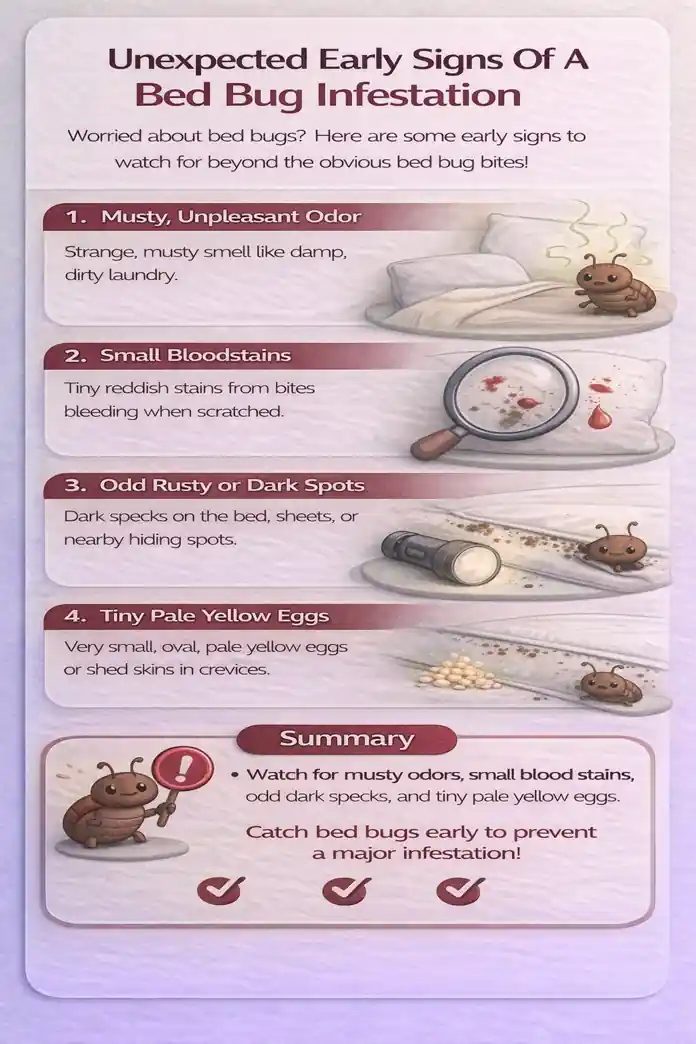
Small Blood Smears on Sheets or Pillowcases
One of the earliest and most overlooked signs is tiny blood smears on bedding. These marks often occur when a bed bug is accidentally crushed after feeding. They’re usually mistaken for nosebleeds, minor scratches, or unrelated stains, especially when they appear infrequently.
Unexplained Bite Patterns That Appear Overnight
Bed bug bites don’t affect everyone the same way. Some people show no reaction at all, while others develop itchy welts. Early infestations often produce small clusters or lines of bites that appear overnight, commonly on exposed skin such as arms, neck, or shoulders.
Dark Spots on Mattress Seams or Furniture Joints
Before bed bugs spread widely, they tend to stay close to sleeping areas. Small dark spots—often fecal marks—may appear along mattress seams, bed frames, headboards, or nearby furniture joints. These marks are frequently mistaken for dirt or wear.
Musty or Sweet Odors in Sleeping Areas
In some cases, early infestations produce a faint, musty odor. This smell comes from scent glands bed bugs use to communicate. It’s subtle at first and often blamed on humidity, laundry, or room ventilation rather than pests.
Increased Activity Around Bed Frames or Nightstands
People often report hearing faint rustling, noticing small shell-like debris, or seeing movement in low light near beds. These signs are rare early on but do occur before infestations become visible during the day, making early awareness important when considering pest control methods.
“In most of the homes we clean out, bed bugs weren’t discovered because someone finally saw one—they were discovered because small, ignored signs kept repeating. When people notice changes around their bed early and take them seriously, it’s usually the difference between a contained issue and a full-scale infestation.”
Essential Resources on Bed Bugs
EPA Bed Bug Guide — Practical Identification & Treatment Tips
https://www.epa.gov/bedbugs
Clear guidance on identifying bed bugs, understanding treatment options, and avoiding unsafe pesticides.
Clear guidance on identifying bed bugs, understanding treatment options, and avoiding unsafe pesticides.
CDC Bed Bug Resource — Health Risks & Prevention
https://www.cdc.gov/parasites/bedbugs
Medical insight into bites, reactions, and prevention strategies.
Medical insight into bites, reactions, and prevention strategies.
NPMA Bed Bug Guide — Professional Detection Advice
https://www.pestworld.org/pest-guide/bed-bugs
Industry-backed information on early warning signs and infestation behavior.
Industry-backed information on early warning signs and infestation behavior.
Mayo Clinic — Bed Bug Bite Symptoms
https://www.mayoclinic.org/diseases-conditions/bed-bugs
Clinically reviewed explanations of bed bug bites and skin reactions.
Clinically reviewed explanations of bed bug bites and skin reactions.
Harvard T.H. Chan School of Public Health — Bed Bug Research
https://www.hsph.harvard.edu/bedbugs
Research-driven insights into how bed bugs spread and persist.
Research-driven insights into how bed bugs spread and persist.
University of Kentucky Entomology — Bed Bug Biology
https://entomology.ca.uky.edu/ef636
Detailed explanations of bed bug behavior, hiding habits, and control.
Detailed explanations of bed bug behavior, hiding habits, and control.
Consumer Reports — Treatment & Product Testing
https://www.consumerreports.org/pests/how-to-get-rid-of-bed-bugs-a3329821929
Real-world testing of products and treatment expectations.
Together, these trusted resources provide clear, science-backed guidance on identifying, preventing, and managing bed bugs, while also highlighting how related home maintenance steps such as dryer vent cleaning services can support a cleaner, less hospitable environment for infestations to spread.
Real-world testing of products and treatment expectations.
Supporting Statistics
Fewer than 30% of Americans can correctly identify bed bugs
Early signs are commonly missed, allowing infestations to grow.
Source: NPMA / Harris Poll
https://www.pestworld.org/news-hub/pest-articles/bed-bug-survey-results-facts/
Only 28% of travelers inspect hotel rooms for bed bugs
Many infestations begin during travel and surface weeks later at home.
Source: NPMA / Harris Poll
https://www.pestworld.org/news-hub/pest-articles/bed-bug-survey-results-facts/
Over 80% of pest professionals treat bed bugs annually
This reflects how common infestations are across the U.S.
Source: NPMA / University of Florida
https://www.pestworld.org/news-hub/pest-articles/bed-bug-survey-results-facts/
20+ U.S. states have bed bug–related regulations
Mishandling infested items can create legal and health risks.
Source: U.S. EPA
https://www.epa.gov/bedbugs/bed-bug-laws-and-regulations
Fewer than 30% of Americans can correctly identify bed bugs
Early signs are commonly missed, allowing infestations to grow.
Source: NPMA / Harris Poll
https://www.pestworld.org/news-hub/pest-articles/bed-bug-survey-results-facts/
Only 28% of travelers inspect hotel rooms for bed bugs
Many infestations begin during travel and surface weeks later at home.
Source: NPMA / Harris Poll
https://www.pestworld.org/news-hub/pest-articles/bed-bug-survey-results-facts/
Over 80% of pest professionals treat bed bugs annually
This reflects how common infestations are across the U.S.
Source: NPMA / University of Florida
https://www.pestworld.org/news-hub/pest-articles/bed-bug-survey-results-facts/
20+ U.S. states have bed bug–related regulations
Mishandling infested items can create legal and health risks.
Source: U.S. EPA
https://www.epa.gov/bedbugs/bed-bug-laws-and-regulations
Final Thought & Opinion
Bed bug infestations rarely start with seeing a bug
They begin with subtle, unexpected signs that feel easy to ignore
From firsthand experience, recognizing these early clues makes a major difference:
Infestations stay contained
Fewer belongings are affected
Cleanup and stress are significantly reduced
Once early signs are ignored, bed bugs spread beyond beds and into furniture, making the situation far more disruptive.
Bottom line: Unexpected signs are often the most important ones. Paying attention early with duct cleaning is what keeps a small issue from becoming a major cleanout.
Bed bug infestations rarely start with seeing a bug
They begin with subtle, unexpected signs that feel easy to ignore
Infestations stay contained
Fewer belongings are affected
Cleanup and stress are significantly reduced
Next Steps
Take action early to limit spread.
Check sleeping areas
Inspect sheets, mattress seams, and bed frames.
Watch for patterns
Note recurring stains, bites, or odors.
Avoid moving items
Moving furniture can spread bed bugs.
Wash and heat-dry bedding
Use hot water and high heat.
Inspect nearby furniture
Focus on nightstands, couches, and headboards.
Seek help if signs persist
Early professional guidance prevents escalation.
Check sleeping areas
Inspect sheets, mattress seams, and bed frames.
Watch for patterns
Note recurring stains, bites, or odors.
Avoid moving items
Moving furniture can spread bed bugs.
Wash and heat-dry bedding
Use hot water and high heat.
Inspect nearby furniture
Focus on nightstands, couches, and headboards.
Seek help if signs persist
Early professional guidance prevents escalation.
FAQ on Bed Bugs
Q: What are early signs of a bed bug infestation?
A:
Small blood or dark stains
Bite patterns appearing overnight
Subtle odors or debris near beds
Q: Do early signs always include bites?
A:
No
Some people show no reaction
Physical signs often appear first
Q: Where do early signs usually show up?
A:
Sheets and pillowcases
Mattress seams
Bed frames and nearby furniture
Q: Can early signs disappear on their own?
A:
No
Bed bugs multiply quickly
Ignoring signs allows spread
Q: When should I get professional help?
A:
When signs repeat
When furniture is affected
When uncertainty remains
A:
Small blood or dark stains
Bite patterns appearing overnight
Subtle odors or debris near beds
A:
No
Some people show no reaction
Physical signs often appear first
A:
Sheets and pillowcases
Mattress seams
Bed frames and nearby furniture
A:
No
Bed bugs multiply quickly
Ignoring signs allows spread
A:
When signs repeat
When furniture is affected
When uncertainty remains