At Jiffy Junk, we come across acetone constantly during garage and workshop cleanouts, and the same disposal errors show up again and again. This step-by-step guide breaks down the safest, rule-friendly way to store, handle, and dispose of acetone—so you can get it out of your workshop without guessing.
TL;DR Quick Answers
How to Dispose of Acetone
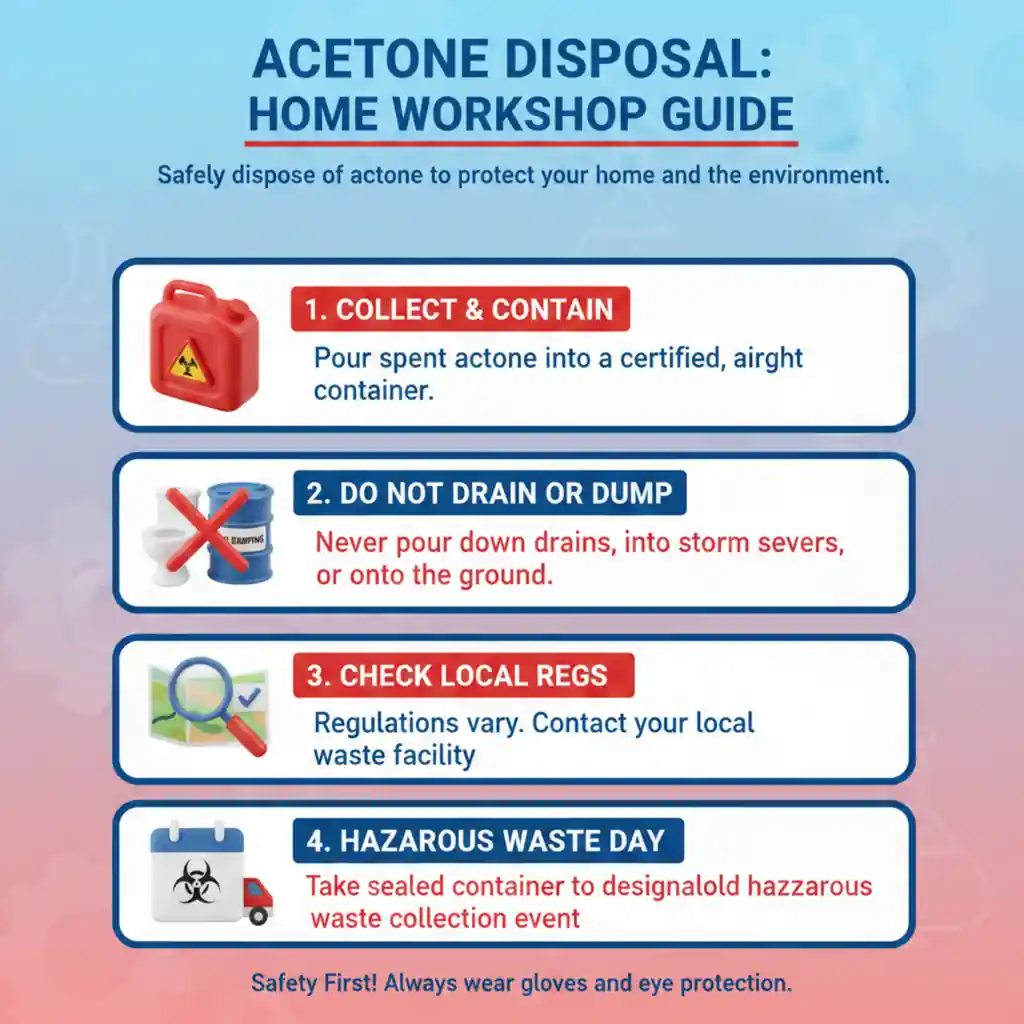
Treat acetone like household hazardous waste. Keep it sealed and labeled, store it away from heat or sparks, and take it to a local HHW drop-off site or collection event. At Jiffy Junk, we see the biggest problems when people try to “quick dump” it—if it still pours, don’t guess.
Top Takeaways
Acetone is flammable. Workshop storage increases risk.
Don’t dump it down drains or toss liquid acetone in the trash.
Best option: HHW drop-off or collection event.
Store it safely (sealed, upright, labeled, away from heat/sparks).
Handle acetone-soaked rags carefully—they’re part of the hazard too.
Identify What You’re Disposing Of (Pure Acetone vs. Mixed Waste)
In a home workshop, acetone usually shows up in three forms: a bottle of clean solvent, a partially used container, or acetone that’s been contaminated with paint, glue, or grime. That distinction matters because pure acetone is easier to handle, while mixed or dirty acetone is more likely to be treated as hazardous waste.
At Jiffy Junk, we see workshop setups where acetone is stored next to stains, thinners, and cleaners—so the first step is always knowing what you actually have before you try to toss it.
Quick Check
If it’s cloudy, tinted, has debris, or smells “off,” treat it as contaminated acetone and plan for proper hazardous waste disposal.
Step-by-Step: How to Dispose of Acetone From a Home Workshop
The safest disposal method depends on how much acetone you have and how it’s been used. Follow these steps to stay safe and avoid local rule violations.
Step 1: Stop Using It and Seal the Container
Close the lid tightly. Do not leave acetone open in a workshop—even briefly—because vapors build fast and can travel toward ignition sources.
Step 2: Move It Away From Heat and Sparks
Store it away from:
Pilot lights
Space heaters
Power tools
Extension cords
Smoking/grilling areas
Even small amounts can ignite easily in the wrong conditions.
Step 3: Keep It in the Original Container (or a Compatible One)
The original labeled container is best because it clearly identifies the chemical. If you must transfer it, use a compatible container designed for flammable solvents and label it clearly.
Step 4: Separate Acetone-Soaked Rags From Regular Trash
This is where many workshop cleanups go wrong. Rags soaked with solvents can stay flammable long after they “feel dry.”
Store rags in a sealed, non-flammable container until you can dispose of them properly.
Step 5: Use a Household Hazardous Waste (HHW) Drop-Off Site
For most homeowners, the safest and most compliant option is a local HHW program, such as:
City/county hazardous waste drop-off sites
Community chemical collection events
This is the easiest way to dispose of acetone without guessing what’s legal in your area.
What NOT to Do With Workshop Acetone
To avoid safety risks and rule violations, do not:
Pour acetone down the sink or storm drain
Throw liquid acetone in the trash
Burn it or dump it outdoors
Mix it with other solvents/chemicals “to get rid of it faster”
These are the exact disposal shortcuts we see most often during workshop cleanouts—and they’re the ones most likely to cause problems.
When It’s Time to Call in Help
If you’re clearing out an entire workshop or garage and you’ve got multiple chemicals, unknown liquids, or several containers of solvent, it may be safer to get help.
At Jiffy Junk, we’ve seen how quickly a “simple cleanup” becomes risky when flammables, rags, and old containers are involved. When in doubt, treat acetone like hazardous waste and choose a disposal method that’s safe, legal, and handled properly.
“Workshop acetone is one of those items that looks harmless until you see how people actually store it—next to rags, paint cans, and heat sources. At Jiffy Junk, during junk removal services, we’ve walked into countless garage cleanouts where acetone was half-open, unmarked, or tossed into a trash bag like it was water. Our rule is simple: if it still pours or smells strong, treat it like hazardous waste—seal it, separate anything it touched, and take it to a proper HHW drop-off instead of risking fumes or fire.”
Essential Resources
EPA Household Hazardous Waste (HHW) Guide — The Official Baseline for Safe Disposal
This is where the rules start. The EPA lays out why common workshop solvents like acetone are treated as hazardous waste and why drop-off programs exist. We follow this guidance on every job because it keeps you compliant and protects your home systems.
https://www.epa.gov/hw/household-hazardous-waste-hhw
EPA Waste Regulations Overview — Why Acetone Disposal Can’t Be Ignored
If you want to understand why pouring acetone down the sink is a bad idea, this federal overview explains how hazardous waste is classified under RCRA and why solvents are regulated differently than everyday trash.
https://www.epa.gov/regulatory-information-topic/regulatory-and-guidance-information-topic-waste
Miami Hazardous Materials Disposal — A Real Municipal Example
Seeing how a city handles hazardous chemical disposal puts the rules in action. This page shows what types of workshop chemicals are accepted at a local drop-off, so you know what a proper HHW program looks like in practice.
https://www.miami.gov/My-Government/Departments/Solid-Waste/Dispose-of-Hazardous-Materials-Chemicals
Miami-Dade Home Chemical Collection — Drop-Offs & Household Hazardous Waste Events
County-level HHW centers and collection events are often where homeowners take acetone and other solvents for free. This resource shows a real-world example of how scheduled events and facilities work.
https://www.miamidade.gov/global/service.page?Mduid_service=ser1464798615648535
Florida DEP Household Hazardous Waste Program — State Perspective on Disposal
State programs support municipal HHW efforts and provide guidance on safe handling and disposal of hazardous home chemicals, including solvents you might find in a workshop. This gives context for how regulations play out beyond the federal level.
https://floridadep.gov/waste/permitting-compliance-assistance/content/household-hazardous-waste
Ethical Shift Acetone Disposal — Environment-Driven Insight on Safe Options
This resource focuses on the environmental impact of improper acetone disposal and explains why responsible handling matters beyond just following the rules — a perspective we reinforce when educating homeowners about long-term safety and community health.
https://www.ethicalshift.com/recycle/how-to-dispose-of-acetone-safely-and-responsibly
DisposeCleverly Acetone Tips — Practical Handling Advice You Can Use Today
For quick, actionable tips on handling and preparing acetone for disposal, this guide reinforces key safety points like avoiding drains and checking local hazardous waste options — the same practical advice we give clients prepping for a workshop cleanout.
https://www.disposecleverly.com/dispose-of-acetone-safely/
Supporting Statistics
Hazardous waste builds up in homes
Average U.S. household generates 20+ lbs of household hazardous waste per year
Up to 100 lbs can accumulate in the home
Jiffy Junk insight: In workshop cleanouts, acetone and other solvents are some of the most common “left-behind” items.
Source (EPA): https://archive.epa.gov/region9/waste/archive/web/html/house.html
Acetone fumes have real exposure limits
NIOSH REL: 250 ppm (TWA)
OSHA PEL: 1,000 ppm (TWA)
Jiffy Junk insight: Loose caps + enclosed garages = strong fumes faster than people expect.
Source (CDC/NIOSH): https://www.cdc.gov/niosh/npg/npgd0004.html
Fire risk is measurable
~1,388,000 fires responded to in the U.S. (2024)
~$19 billion in direct property damage
Jiffy Junk insight: Trash loads are compacted and moved—bad conditions for flammable liquids like acetone.
Source (NFPA): https://www.nfpa.org/education-and-research/research/nfpa-research/fire-statistical-reports/fire-loss-in-the-united-states
These statistics show why pest control work in garages and workshops should always include checking for acetone and other hazardous solvents, since fumes and fire risks can escalate quickly in enclosed spaces.
Final Thought & Opinion
Disposing of workshop acetone isn’t just cleanup—it’s risk prevention. Acetone is highly flammable, produces strong vapors, and is usually stored in the worst possible place for flammables: garages and workshops full of rags, tools, and heat sources.
Safest way to handle it
Keep it sealed
Store it away from sparks/heat
Use a local Household Hazardous Waste (HHW) drop-off or collection event
Jiffy Junk’s real-world opinion
Most acetone problems don’t start with the chemical—they start with “I’ll deal with it later.” During cleanouts, we’ve seen acetone tossed in trash bags, left open on workbenches, or stored in unmarked containers. That’s when leaks and fumes happen.
Rule we trust: Treat acetone like fuel, not trash.
FAQ on How to Dispose of Acetone
Q: Can I pour acetone down the drain in a home workshop?
A: Usually, no. Acetone is often treated as household hazardous waste (HHW), and drain disposal can create fumes and trigger local rule issues. The safest option is HHW drop-off.
Q: Can I throw workshop acetone in the trash?
A: Not if it’s still liquid. Liquid acetone is a fire risk because trash gets compacted and transported. Rule of thumb: if it still pours, don’t trash it.
Q: What’s the safest way to dispose of acetone from a home workshop?
A: Seal the container, label it, and take it to an HHW drop-off site or collection event. At Jiffy Junk, we recommend this because it removes guesswork and keeps disposal compliant.
Q: What should I do with acetone-soaked rags?
A: Treat them as part of the hazard. Solvent-soaked rags can stay flammable longer than people expect, even when they feel dry. Store them in a sealed, non-flammable container and follow HHW disposal guidance.
Q: How should I store acetone until disposal day?
A: Store it like fuel. Keep it upright and tightly sealed, and keep it away from heat, sparks, and tools. In our experience, most issues come from leaks and loose caps—not the acetone itself.