This guide explains what to do when your furniture has bed bugs, using practical lessons learned from on-site removals and infestation cleanups. You’ll learn how to contain the problem, protect your space, and decide when bed bug furniture removal is the safest and most effective solution—so you can act quickly, avoid costly mistakes, and stop the spread before it takes over your home.
TL;DR Quick Answers
bed bug furniture removal
Containment comes first. Seal infested furniture before moving it to prevent spread.
Not all furniture must be discarded. Solid wood or metal may be treatable; heavily infested upholstered items often aren’t.
Avoid temporary storage. Bed bugs can survive for months inside furniture.
Removal should be controlled. Proper sealing, labeling, and transport reduce re-infestation risk.
Professional handling matters. Experienced removal teams focus on containment, not just hauling.
Top Takeaways
Containment comes first.
Moving furniture too soon spreads bed bugs.Some furniture can be saved. Some can’t.
Material and infestation level matter.Handling mistakes causes spread.
Rushed first steps make infestations worse.Temporary storage is risky.
Bed bugs can survive for months in furniture.Professional removal reduces risk.
Proper sealing and transport prevent wider infestation.
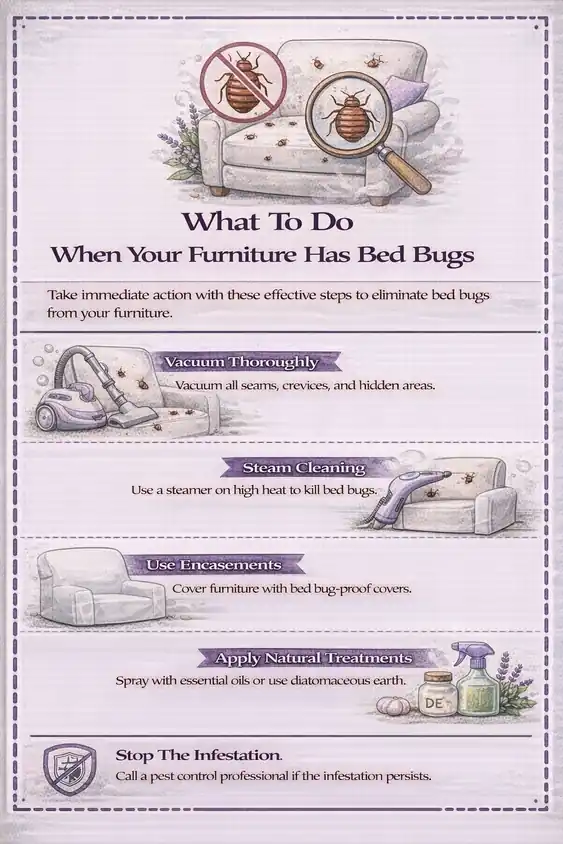
What To Do When Your Furniture Has Bed Bugs
Bed bugs in furniture require fast, controlled action. Based on what Jiffy Junk teams encounter during real home cleanouts and furniture removals, the biggest risk isn’t the bugs themselves—it’s how easily they spread when furniture is handled the wrong way. Before moving, discarding, or treating anything, the goal is containment.
Step 1: Stop the Spread Immediately
As soon as bed bugs are suspected, avoid dragging furniture through your home. Movement allows bugs and eggs to drop off and infest new areas. If possible, isolate the item where it sits and limit foot traffic around it. Covering furniture with heavy-duty plastic or mattress-grade encasements can help prevent escape while you plan next steps.
Step 2: Decide Whether Treatment or Removal Makes Sense
Not all infested furniture needs to be thrown away—but not all of it can be saved. Solid wood or metal pieces may be treatable with professional heat or chemical solutions. Upholstered furniture, especially items with deep seams or internal padding, is often far harder to fully eliminate. From our experience, attempting to save heavily infested upholstered pieces frequently leads to repeat infestations.
Step 3: If Removing Furniture, Do It Safely
If disposal is necessary, how furniture is removed matters. Items should be sealed before being taken out of the home and clearly labeled to prevent reuse. Improper disposal—such as leaving furniture uncovered at the curb—can spread bed bugs to neighbors or shared buildings. Professional removal helps ensure infested items are handled, transported, and disposed of responsibly.
Step 4: Prevent Re-Infestation
After furniture is treated or removed, monitor the area closely. Wash nearby fabrics on high heat, vacuum thoroughly, and consider professional inspection if the infestation was widespread. The goal isn’t just removing one item—it’s breaking the infestation cycle.
“One of the biggest mistakes we see is people moving infested furniture before it’s contained. In our day-to-day removal work, bed bugs almost never spread on their own—they spread because furniture is handled the wrong way. The first priority isn’t disposal, it’s control. When you slow down and isolate the piece properly, you dramatically reduce how far the infestation can travel.”
Essential Resources
Making the right call about infested furniture can save you stress, money, and headaches. Below are trusted, practical resources Jiffy Junk recommends to help you decide when to treat, when to remove, and how to do it the right way—without spreading the problem.
EPA Bed Bug Prevention, Detection & Control
Clear, no-nonsense guidance on identifying and managing infested furniture
The Environmental Protection Agency explains how to spot signs of bed bugs, protect your home, and determine what’s worth saving versus what needs removal.
https://www.epa.gov/bedbugs/bed-bug-prevention-detection-and-control
CDC Bed Bugs Overview
Authoritative health information you can trust
The Centers for Disease Control and Prevention answers common questions about bed bugs, health risks, and when professional help is advisable—ideal for homeowners concerned about safety.
https://www.cdc.gov/bed-bugs/about/index.html
Purdue University Extension — Furniture Disposal & Containment
Step-by-step instructions for safe handling and disposal
This university resource offers proven techniques for isolating, wrapping, and disposing of infested furniture in ways that prevent spread—exactly what pros focus on before removal day.
https://extension.entm.purdue.edu/bedbugs/furnitureDisposal.php
EPA Preparing for Bed Bug Treatment
Smart preparation tips before moving or removing anything
This EPA guide walks you through essential prep steps that make containment and treatment more effective, reducing the chance of spreading bugs through your home.
https://www.epa.gov/bedbugs/preparing-treatment-against-bed-bugs
Cornell University IPM — Printable Bed Bug Resources
Visual aids and checklists for quick reference
Easy-to-follow PDF resources help you recognize bed bug signs and understand treatment priorities, perfect for homeowners who want clear visuals and quick takeaways.
https://cals.cornell.edu/integrated-pest-management/outreach-education/whats-bugging-you/bed-bugs/printable-bed-bug-resources
Purdue University Extension — Bed Bug Control Techniques
Expert advice on evaluating treatment vs. removal
This evidence-based resource explains physical, chemical, and heat-based control options so you can judge whether furniture can realistically be saved before acting.
https://extension.entm.purdue.edu/bedbugs/control.php
EPA Bed Bugs Information Hub
Central source for fact-checked, official information
The EPA’s main bed bug page brings together prevention, control, and disposal guidance, helping you cut through myths and focus on what actually works.
https://www.epa.gov/bedbugs
For homeowners dealing with infested furniture, these trusted resources support safer decisions—so you know when to treat, when to remove, and when junk removal services are the best option to prevent bed bugs from spreading.
Supporting Statistics
Bed bugs spread faster than most people realize
The CDC reports that a single female bed bug can lay up to 5 eggs per day.
In real-world removals, this explains why moving infested furniture too soon often turns a small issue into a whole-home problem.
Source: https://www.cdc.gov/dpdx/bedbugs/index.htmlInfested furniture can remain a risk for months
According to the CDC, bed bugs can survive several months without feeding.
Jiffy Junk teams regularly see re-infestations caused by furniture stored “temporarily” in garages, basements, or spare rooms.
Source: https://www.cdc.gov/bed-bugs/about/index.htmlMost people misidentify bed bugs
A PestWorld survey found that only 29% of Americans can correctly identify bed bugs.
Acting on assumptions—before confirmation—often leads to the wrong first step and wider spread.
Source: https://www.pestworld.org/news-hub/pest-articles/bed-bug-survey-results-facts/Bed bug encounters are common, not rare
The same PestWorld research shows 82% of pest control professionals treated bed bugs in the past year.
From nationwide removal experience, bed bug furniture calls are routine—and require proper containment to avoid escalation.
Source: https://www.pestworld.org/news-hub/pest-articles/bed-bug-survey-results-facts/
Final Thought & Opinion
Based on firsthand experience at Jiffy Junk, bed bugs are rarely the real issue. The response is. Most infestations worsen because of rushed decisions, misidentification, or moving furniture before it’s properly contained.
What we consistently see on-site:
Infestations spread when furniture is moved too quickly.
“Temporary” storage often leads to re-infestation.
Improper curbside disposal can affect neighbors and shared buildings.
The most effective approach isn’t panic—it’s control.
Slow down and isolate the furniture.
Confirm the infestation before acting.
Decide whether treatment or removal actually makes sense.
If removal is needed, handle it with containment in mind.
In our opinion, bed bug furniture removal isn’t just junk hauling—it’s a containment job. When done correctly, it’s often the step that stops an infestation from spreading further and turns a stressful situation back into a manageable one.
FAQ on Bed Bug Furniture Removal
Q: Do bed bugs–infested furniture always need to be thrown out?
A: No.
Solid wood or metal may be treatable.
Heavily infested upholstered furniture is often not worth saving.
Q: What’s the safest way to move infested furniture?
A: Containment first.
Never move items uncovered.
Seal furniture before transport.
Limit movement through the home.
Q: Can I store infested furniture temporarily?
A: Not recommended.
Bed bugs can survive for months.
Stored furniture commonly causes re-infestation.
Q: Should I try treating the furniture myself?
A: Sometimes—but with caution.
Light cases may respond to treatment.
DIY attempts often delay proper removal.
Q: How should bed bugs–infested furniture be disposed of?
A: Controlled removal is key.
Seal and label the item.
Follow local disposal rules.
Professional removal reduces spread risk.